
Team Building 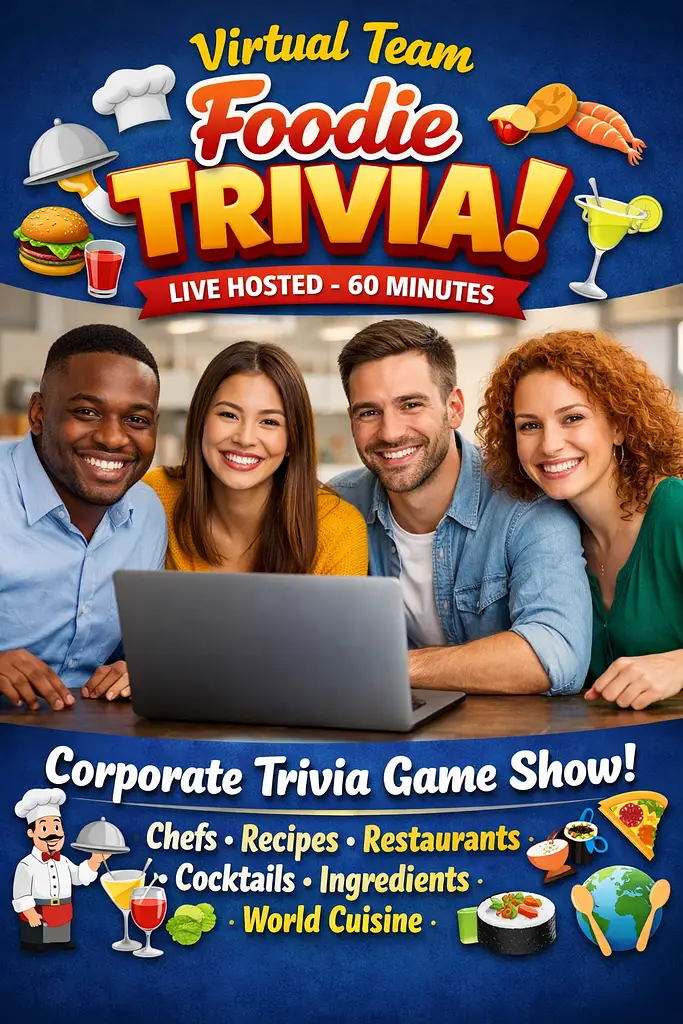 Check Availability & Book
Check Availability & Book
Check Availability & Book
7 Benefits of Virtual Foodie Trivia for Team Building
August 25, 2025 7 min read
Every team building activity promises connection. Most deliver awkward silences and forced participation. Foodie trivia is different because it taps into something every single person on your team already cares about: what they eat. That universal foundation makes it the most naturally engaging virtual team event you can book, and the benefits go far beyond a fun hour on Zoom.
Here are seven specific reasons foodie trivia consistently outperforms other team building formats.
1. Zero Barriers to Participation
The biggest problem with most trivia formats is that they accidentally exclude people. Not everyone follows sports. Not everyone watches award-winning films. Not everyone listens to current music. But everyone eats. Every person on your team has ordered at restaurants, cooked meals, tried new cuisines, and formed strong opinions about the right way to make a grilled cheese sandwich.
That universal knowledge base means participation starts high and stays high. The person who never contributes in meetings suddenly has strong opinions about whether deep dish counts as real pizza. The new hire who has been quietly observing for weeks jumps in to defend their hometown’s barbecue style. Food removes the expertise barrier that makes other trivia formats feel exclusionary.
2. Food Conversations Reveal Personality in a Safe Way
In a work environment, people are cautious about sharing personal details. But food preferences feel safe enough to share openly. When someone passionately argues that cilantro is a crime against humanity, the team learns something real about that person without anyone feeling vulnerable.
These food-based personality reveals add up over the course of an event. The teammate who has tried every hot sauce on the market. The colleague who bakes sourdough every weekend. The manager who once ate a live octopus in Seoul. Each revelation adds a dimension to how the team sees each other, and those dimensions are what turn coworkers into people who genuinely enjoy working together. We explore this dynamic in depth in how foodie trivia brings remote teams together.
About Your Host: Pop Culture Expert and Radio Host Scott Topper
Foodie trivia needs a host who knows when to let a great food debate breathe and when to bring the competition back into focus. Scott Topper is an Emmy Award-winning TV and radio host who has hosted hundreds of virtual events. As a pop culture expert and radio host, Scott brings the energy of a cooking competition to every foodie trivia event, keeping the pace lively and the conversations flowing.
“The best moments in foodie trivia are the ones I cannot plan for,” Scott says. “Someone shares a family recipe story, or two teammates discover they grew up eating the same regional dish three thousand miles apart. Those moments are the whole point of team building, and food creates them more reliably than anything else.”
🍕 Virtual Team Foodie Trivia Game Show
Categories include Chefs, Recipes, Restaurants, Cocktails, Ingredients, and World Cuisine Trivia!
$300 up to 10 people
$25 each additional participant
3. It Naturally Celebrates Cultural Diversity
Global teams struggle with team building activities that lean too heavily on one cultural perspective. Foodie trivia turns cultural diversity into the main event. A round on world cuisines is not just a quiz. It is a celebration of every food tradition represented on the team.
The teammate from Mexico lights up during questions about mole and street tacos. The colleague whose family is from Ethiopia shares the communal tradition of eating injera. The team member who spent a year in Japan drops insider knowledge about regional ramen styles. Each question becomes an invitation for someone to share their heritage, and the format makes that sharing feel natural rather than forced.
For HR teams focused on inclusion, foodie trivia does something remarkable: it makes DE&I feel like fun rather than a mandate. We dive deeper into why in our guide to why foodie trivia is the most fun virtual team activity.
4. It Pairs Perfectly With Other Activities
Foodie trivia is the only virtual team building format that enhances other experiences happening simultaneously. Send team members a snack box and suddenly the trivia questions connect to what they are eating. Pair it with a virtual wine tasting and the beverage rounds take on a new dimension. Schedule it during lunch and everyone is literally eating while answering food questions.
This pairing ability extends the event’s impact. A standalone trivia night is great. A trivia night combined with a shared food experience is memorable. Companies that pair foodie trivia with a delivered meal or tasting kit consistently report higher satisfaction scores and more post-event conversation.
5. The Debates Are Endless and Hilarious
No other trivia format generates as many passionate, low-stakes arguments as food trivia. Is a hot dog a sandwich? Is ketchup acceptable on a steak? Does pineapple belong on pizza? These are questions that people will argue about with genuine intensity while laughing the entire time.
Those debates serve a real team building purpose. They teach teams how to disagree playfully, how to hold strong opinions without creating conflict, and how to find humor in differing perspectives. The teammate who builds an airtight logical case for why cereal is technically a soup is practicing the same persuasion skills they use in client meetings, just in a context where everyone is having fun. The best question categories for sparking these debates are covered in our guide to foodie trivia categories that get every team talking.
6. It Generates Real-World Follow-Through
Most virtual events end when the Zoom call ends. Foodie trivia keeps going. After the event, Slack channels fill with recipe shares, restaurant recommendations, and food photos. Someone recreates a dish that came up during the game and posts the results. Two teammates discover they live near the same incredible taco spot and plan a meetup.
“The follow-through from foodie trivia events is unlike anything else we host,” Scott says. “I regularly hear from organizers weeks later saying that their team started a recipe-sharing channel or organized a potluck inspired by the trivia. The event becomes a catalyst for ongoing connection rather than a one-time activity.”
7. It Works Year-Round Without Getting Stale
Some trivia themes are seasonal. Holiday trivia peaks in December. Sports trivia spikes around major tournaments. But food is relevant 365 days a year, and the category breadth is effectively infinite. World cuisines, cooking techniques, food science, restaurant culture, beverage history, celebrity chefs, street food, baking, fermentation, molecular gastronomy. You could run foodie trivia monthly for a year and never repeat a category.
That evergreen quality makes it the ideal format for recurring team building programs. Companies that invest in regular virtual events need variety, and foodie trivia delivers it naturally without requiring new formats or unfamiliar activities.
Feed Your Team’s Competitive Spirit
Our Foodie Trivia Game Show covers world cuisines, celebrity chefs, cooking techniques, food history, and everything your team loves to eat and argue about. Live-hosted by Emmy TV and Radio Host Scott Topper with Family Feud-style team competition, Bonus Wheel spins, and 60 minutes of the tastiest virtual team building available.
🍕 Virtual Team Foodie Trivia Game Show
Categories include Chefs, Recipes, Restaurants, Cocktails, Ingredients, and World Cuisine Trivia!
$300 up to 10 people
$25 each additional participant