
Event Planning 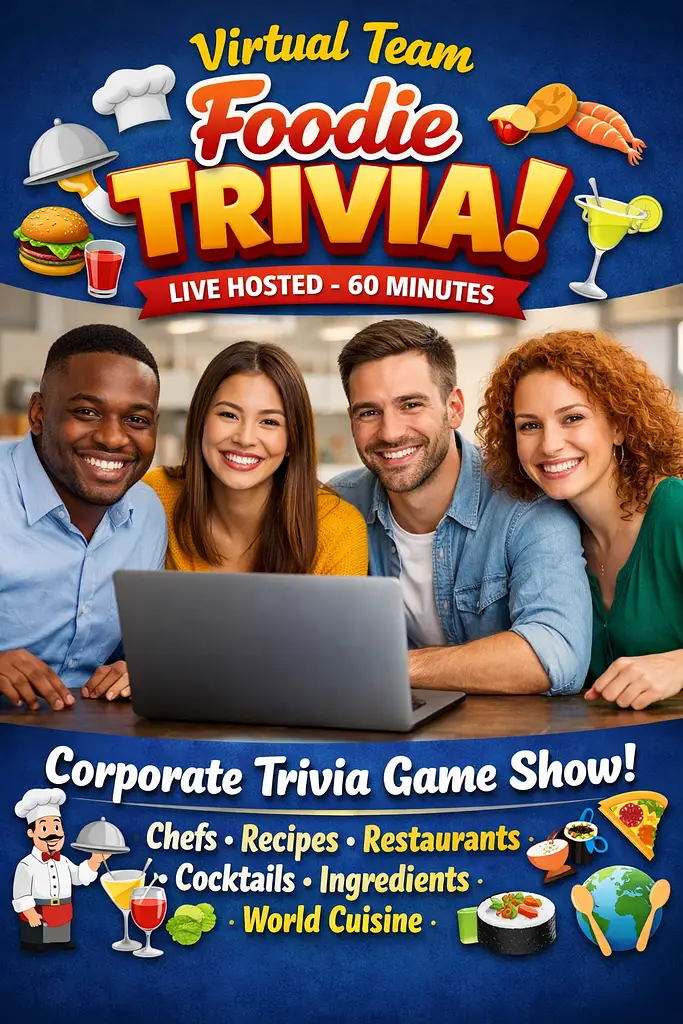 Check Availability & Book
Check Availability & Book
Check Availability & Book
Best Food Trivia Questions for Virtual Team Building Events
May 6, 2025 8 min read
Food is one of the few topics that every single person on your team has an opinion about. Not everyone watches the same shows. Not everyone follows sports. But everyone eats, and everyone has strong feelings about what they eat. That universal connection is what makes foodie trivia one of the most reliably engaging formats for virtual team building events.
The challenge is writing questions that tap into that passion without turning into a culinary school exam. The best food trivia questions spark conversation, trigger memories, and reveal surprising things about your teammates. Here is how to build a question set that does all three.
Cuisine Geography Questions
“Which country is considered the birthplace of pad thai?” sounds like a straightforward geography question. But it opens up something more interesting. Suddenly your team is debating whether pad thai is really Thai, whether someone’s favorite local spot is authentic, and whether authenticity even matters if the food is good.
Cuisine geography questions work because they sit at the intersection of food knowledge and travel experience. Someone who has never cooked a meal in their life might nail a question because they spent a summer in Oaxaca. Someone else might know the answer because their grandmother made that dish every Sunday.
The best questions in this category connect a dish to a place in a way that feels surprising. Most people know sushi comes from Japan. Fewer people know that the modern California roll was invented in Vancouver. That kind of unexpected origin story gets people talking. We break down all the foodie trivia categories that get every team talking if you want to see the full list.
About Your Host: Pop Culture Expert and Radio Host Scott Topper
Food trivia hits differently when the host knows how to work the room. Scott Topper is an Emmy Award-winning TV and radio host who has hosted over 500 virtual events for companies ranging from startups to Fortune 500 enterprises. As a pop culture expert and radio host, Scott understands that food questions are not really about food. They are about the stories and memories people attach to food.
“When someone gets a question about a dish their family makes, you can see it on their face before they even answer,” Scott says. “That is the moment I lean into. I ask them about it, let the team hear the story, and suddenly we are not just playing trivia. We are actually learning about each other.”
🍕 Virtual Team Foodie Trivia Game Show
Categories include Chefs, Recipes, Restaurants, Cocktails, Ingredients, and World Cuisine Trivia!
$300 up to 10 people
$25 each additional participant
Celebrity Chef Questions
Name recognition drives engagement in trivia, and celebrity chefs have become genuine pop culture figures. Questions about Gordon Ramsay, Julia Child, Guy Fieri, and Anthony Bourdain generate reactions that go beyond whether someone knows the answer.
“What show did Gordon Ramsay launch in 2004?” is a trivia question. But the reactions it triggers are emotional. People who love Kitchen Nightmares will defend it passionately. People who prefer MasterChef will make their case. The question becomes a conversation starter.
Mix eras in this category. Julia Child questions test different knowledge than questions about current Food Network stars. A question about Jacques Pépin reaches one demographic. A question about Salt Bae reaches another entirely. That range ensures everyone on the team has at least one moment where they are the expert.
Ingredient Identification Questions
Visual rounds work exceptionally well for food trivia. Show a close-up photo of a spice, an unusual fruit, or a regional ingredient and ask teams to identify it. These questions engage a completely different part of the brain than text-based trivia and give visual learners their chance to shine.
The best ingredient questions have a built-in difficulty curve. Saffron threads are recognizable to most people. Star anise is moderately challenging. But show a photo of asafoetida or fiddlehead ferns and watch the room divide between confident identification and total confusion.
These rounds also create natural teaching moments. When the answer is revealed, people genuinely want to know more. “What does that taste like?” and “Where would I find that?” are questions that come up organically and keep the conversation flowing. That kind of organic sharing is one of the reasons foodie trivia brings remote teams together so effectively.
Restaurant and Fast Food Culture
Everyone has opinions about chain restaurants, and those opinions run surprisingly deep. “What year did McDonald’s introduce the Big Mac?” is not just a date question. It is an invitation for people to share their Big Mac opinions, their fast food guilty pleasures, and their hot takes about which chain has the best fries.
Pop culture expert and radio host Scott Topper uses restaurant questions strategically because they generate the most cross-generational conversation. “The senior VP and the new intern might not share many experiences, but they both have opinions about In-N-Out versus Five Guys. That common ground is gold for team building.”
Include questions about both fast food history and fine dining culture. The contrast keeps things interesting. A question about the origin of drive-through windows followed by a question about Michelin star criteria covers an enormous range and ensures different types of food knowledge get rewarded.
Cooking Technique Questions
“What is the difference between braising and stewing?” separates home cooks from people who live on takeout, and both groups find the question entertaining for different reasons. The home cooks compete to give the most precise answer. Everyone else learns something genuinely useful.
Cooking technique questions work best when they connect a technical term to something people have actually experienced. Most people have eaten a stir-fry but could not define the wok hei concept that makes a great one. Most people have had caramelized onions but do not know why they turn sweet. The gap between experience and knowledge creates curiosity.
Keep these questions accessible by offering multiple choice options. Open-ended cooking technique questions can feel intimidating to non-cooks. But when you present four options and one of them is clearly humorous, even someone who has never turned on a stove can make an educated guess and stay engaged.
Food History and Origin Stories
The history of food is full of stories that sound made up but are completely true. Ketchup was originally a fermented fish sauce. Chocolate was consumed as a bitter drink for centuries before anyone thought to add sugar. Lobster was once considered poverty food served to prisoners.
These questions generate the loudest “No way!” reactions of any food trivia category. The surprise factor is built into the content itself. You do not need clever formatting or tricky wording. The facts are inherently interesting.
Pop culture expert and radio host Scott Topper finds that food history questions create a level playing field because the answers are counterintuitive enough that expertise does not help. “A professional chef is just as surprised as everyone else to learn that carrots were originally purple. That shared surprise is a bonding moment.”
Cocktail and Beverage Rounds
Beverage trivia adds variety to a food-heavy event and tends to bring out a different set of experts on each team. The person who knows everything about wine regions is rarely the same person who can name the ingredients in a classic Negroni. And the craft beer enthusiast brings yet another perspective.
Questions about cocktail origins are particularly effective. “Which cocktail was invented at Harry’s New York Bar in Paris?” connects a drink to a story and a place. Teams that get it right feel sophisticated. Teams that get it wrong often discover a new drink they want to try. Either outcome keeps the energy positive.
Include non-alcoholic beverages to keep the round inclusive. The history of tea, coffee culture around the world, and the rise of craft sodas are all rich territories for trivia that do not center alcohol. For more on pacing these rounds, check out the foodie trivia hosting tips from Emmy TV host Scott Topper.
Building a Complete Foodie Trivia Set
The order of categories matters. Here is a flow that consistently works:
Open with restaurant and fast food culture. These questions are universally accessible and generate immediate opinions. Everyone can participate from the first question.
Move to cuisine geography. The shift from familiar chains to world cuisines broadens the scope and brings in team members with international experience or travel knowledge.
Mid-event: celebrity chefs and food history. By now the room is warmed up. Celebrity questions reward pop culture knowledge, and history questions surprise everyone equally.
Close with ingredient identification or cooking techniques. Visual rounds and hands-on knowledge create a strong finish that feels different from the rounds that came before.
Weave cocktail and beverage questions throughout. Rather than a dedicated drinks round, sprinkle beverage questions into other categories as wildcards to keep the pacing dynamic.
Try It With Your Team
Our Foodie Trivia Game Show uses all of these question styles in a professionally hosted 60-minute format. Every round is curated to maximize participation, and your live host Scott Topper adapts the energy in real time based on your team’s reactions.
🍕 Virtual Team Foodie Trivia Game Show
Categories include Chefs, Recipes, Restaurants, Cocktails, Ingredients, and World Cuisine Trivia!
$300 up to 10 people
$25 each additional participant